![[Nara Gourmet. Japan] 4 Must-Eat Food Must-See Attractions in Nara](https://jonathansin.com/wp-content/uploads/2018/09/40632696002_b6548795a5_z.jpg)
(1) ‘Kasuga Taisha’—a beautiful shrine adorned with rustic lanterns


Kasuga Taisha, one of Japan’s Twenty-Two Grand Shrines, is an important World Cultural Heritage site situated within Nara Park, which covers an area of 660 hectares. Founded in 710, shortly after Nara became the capital, Kasuga Taisha was built to protect the imperial palace and the ruling Fujiwara clan. It enshrines deities such as Futsunushi-no-Mikoto, Takemikazuchi-no-Mikoto, Himegami and Ame-no-Koyane-no-Mikoto. To this day, members of the Imperial Family and the nobility continue to visit the shrine regularly to pay their respects. The shrine’s ‘Kasuga Festival’ is held annually on 13 March.
After visiting the magnificent Tōdai-ji Temple, we took a leisurely stroll along the path up Mount Wakakusa to Kasuga Grand Shrine. Along the 1.5-kilometre-long approach, we saw numerous herds of deer resting and basking in the sun, with both sides lined with stately cedar and birch trees, as well as the two thousand ‘stone lanterns’ that are lit during the Lantern Festival in February and August each year to pray for the elimination of illness and disaster. Passing through the ‘Second Torii’, we arrived at the shrine’s main gate, the ‘South Gate’. Upon entering, you’ll see the wooden shrine, built in the ‘Kasuga-zukuri’ style, surrounded by red corridors. The entire shrine is adorned with rustic hanging lanterns—some bronze-coloured, others golden—which are also lit during the Festival of Ten Thousand Lanterns. In addition to the divine images, the shrine is home to some 300 varieties of plants, offering a different spectacle in every season. Finally, do not forget to purchase a charming deer-shaped ema to make a wish.
(2) A 10,500-yen three-Michelin-starred lunch at ‘Waya Mura’


‘Wamayamura’ is the only Michelin three-star Japanese restaurant in Nara. Early on the morning of our trip, we asked a friend who speaks Japanese to call and book a table and a set menu for us. As soon as we entered the restaurant, a handwritten menu was already laid out on the table; thoughtfully, it featured both Japanese and English translations, allowing diners to clearly understand what they were eating. Set menus at different price points are served on trays of different colours; we opted for the 10,500-yen lunch set. There were eleven courses in total, and both the presentation of each dish and the tableware used were exquisitely refined and meticulously chosen.
First came the starter of spring taro, sea urchin with sesame sauce and wild mountain vegetables, accompanied by a glass of sake to whet the appetite. This was followed by a bowl of light, sweet and umami-rich bonito and kelp soup, containing an abalone dumpling with a texture reminiscent of fish paste and white mochi dumplings. The sashimi was served in a bowl made of crushed ice, featuring tuna, cuttlefish, flounder and sweet prawns—all deliciously fresh and sweet. Other courses included ‘hassun’—a selection of assorted small dishes—as well as steamed dishes, rice dishes, grilled items and cold plates. The ingredients in every dish were of the highest quality and the freshest available. For dessert, we were served a strawberry jelly packed with strawberry pulp, accompanied by mango and coffee. When the dessert was served, the owner actually took it upon himself to write a message of thanks on each guest’s menu using a calligraphy brush. There is none of the arrogance or formality found in other Michelin-starred restaurants here; it is a star-rated restaurant brimming with warmth and hospitality.
(3) ‘Nara Park’: Feeding the cute deer


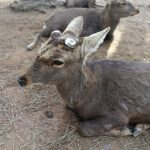
The highlight of any trip to Nara Park is seeing the wild deer of Nara, which are designated as National Treasures of Japan. On the way to the park, you’ll see numerous warning signs about the deer, as they can dart out onto the road at any moment; therefore, visitors travelling by car or bicycle must take particular care.
There are many stalls in Nara Park selling deer biscuits (10 for 150 yen) to feed the deer. As soon as you hold these deer biscuits in your hand, several friendly and adorable deer will come over begging for food; in the blink of an eye, they’ll polish off all the biscuits, leaving nothing but their drool on your hands! According to official statistics, there are over a hundred incidents each year of Nara deer attacking tourists. In my own experience, as long as you treat the deer properly, they aren’t nearly as fierce as you might imagine; in fact, they’ll happily pose for photos with you. The most important thing is that when feeding the deer, you must not tease them; tempting them with deer biscuits but delaying the actual feeding will only make them restless. There are also signs in the park reminding visitors not to chase or kick the deer, and not to feed them anything other than deer biscuits. Finally, please remember to take your rubbish away with you to prevent the deer from accidentally ingesting it. During the fawn-birthing and mating seasons, the deer may be more agitated, so extra caution is required. As long as you follow the above rules, you can enjoy a safe and pleasant time with the deer.
(4) Tōdai-ji: A must-see millennium-old World Heritage Site in Nara and the world’s largest wooden structure


Tōdai-ji was founded in the eighth century by Emperor Shōmu, a devout Buddhist, and has a history spanning more than 1,200 years. Built to the east of Heijō-kyō, the capital at that time, it was named ‘Tōdai-ji’ (Great Eastern Temple); it is also known as the ‘Temple of the Four Heavenly Kings Guarding the Nation under the Light of the Golden Buddha’ and enjoys a status second to none. As well as being the head temple of the Hossō school and one of the Seven Great Temples of Nara, it also serves as the central temple for Japan’s 68 Buddhist temples. This structure, the world’s largest wooden building, was designated a World Heritage Site in 1998.
Upon entering through the South Gate—designated a National Treasure—visitors are greeted not only by the eight-foot-tall twin ‘Vajra Guardian Deity’ statues and the ‘Stone Lion Statues’ (designated as Important Cultural Properties) flanking either side, but also by a herd of mischievous and adorable Nara deer. Passing through the elegantly designed Middle Gate, you arrive at the ‘Great Buddha Hall’, a structure so magnificent it takes one’s breath away. Standing 46.8 metres high, 57 metres wide and 50.5 metres deep, the ‘Great Buddha Hall’ houses the colossal statue of the ‘Rushana Buddha’, which stands over 15 metres tall. Within the temple grounds stands a giant wooden pillar; it is said that anyone who successfully passes through the small rectangular opening—known as ‘the Great Buddha’s nostril’—will be free from illness and misfortune. Other sites well worth a visit include the Nigatsu-dō and Sangatsu-dō halls, as well as the Shōsō-in Repository, from which one can look down upon the Great Buddha Hall and enjoy panoramic views of Nara city.
 Chinese (Hong Kong)
  Chinese (China)
  English
  Japanese
  Korean