![[Hong Kong Cuisine] Tsing Yi Theatre Pavilion – 100 varieties of street food; Hong Kong’s largest night market-style festival, held only twice a year; the Tsing Yi Theatre Pavilion for the Hong Kong festivals celebrating the Birthday of Tin Hau and the Birthday of the True Lord Emperor](https://jonathansin.com/wp-content/uploads/2018/09/dsc09228-1.jpg)
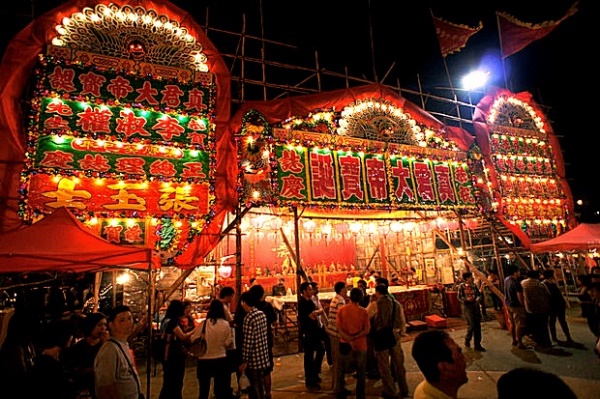
Every year in the third or fourth month of the lunar calendarQingyiThere are two traditional festivals on this small island that people look forward to: the first being the ‘Birthday of the Great Lord Zhenjun’, which runs for five days from the 12th to the 16th of the third lunar month; the second is the ‘Birthday of the Goddess of the Sea’, which runs from the 1st to the 5th of the fourth lunar month, also lasting five days, with a two-week gap between the two celebrations. Every evening, the theatre is packed to the rafters, whilst the football pitch is lined with food stalls, many of which have long queues. Looking towards the Tsing Yi theatre from the shopping centre opposite, it is clear that the scale of the event is quite substantial.
《Date of the event》
2017
‘The Birthday of the True Lord and Great Emperor’ 8–12 April 2017
‘The Birthday of the Heavenly Empress’ 26–30 April 20172018
‘The Birthday of the True Lord and Great Emperor’ 27 April–1 May 2018
‘The Birthday of the Heavenly Empress’ 15–19 May 20182019
‘The Birthday of the True Lord and Great Emperor’ 16–20 April 2019
‘The Birthday of the Heavenly Queen’ 5–9 May 20192020
‘The Birthday of the True Lord and Great Emperor’ 4–8 April 2020
‘The Birthday of the Heavenly Empress’ 23–27 April 2020
‘Key Points for Enjoying Qingyi Opera Performances’
What exactly is there to enjoy at the traditional Tsim Sha Tsui festival in this remote part of Tsing Yi? The Tsing Yi Theatre Complex. It is broadly divided into two sections: (1) the ”street food stalls”, which specialise in authentic Hong Kong snacks; and (2) the ”main theatre”, where Cantonese opera performances are staged.”
‘Authentic Hong Kong Street Food Stalls’
(1) I have previously visited the Tsing Yi open-air theatre. The organisers explained that the site of this theatre is normally a football pitch, which was formerly granted by the Hong Kong Government to the ”Tsing Yi Rural Committee” for its use, and the Committee is free to determine how the site is utilised. Consequently, every year during the festivals celebrating the ‘Birthday of the True Lord’ and the ‘Birthday of the Heavenly Queen’, the Rural Committee organises these carnival-style festive events and sets up a theatre to entertain the public.
I believe that the young people who come here are, like me, drawn by those all-important dozen or so food stalls selling authentic Hong Kong street food. The food stalls begin opening one after another from half past two in the afternoon each day, continuing until around eleven o’clock at night; once the main performance at the theatre has finished, the food stalls begin to close.
‘Over a Hundred Types of Street Food’
Apart from the ”stinky tofu” stall—which is closed this year following an accident last year—there are literally hundreds of different snacks to be found at the Tsing Yi Theatre. What’s more, the market offers not only authentic Hong Kong street food but also an international selection. I reckon this is probably the place in Hong Kong with the highest concentration of authentic street food; it’s virtually impossible to try them all in one go. What’s even more of a shame is that the Tsing Yi Theatre Pavilion only hosts the festival during two periods each year: the ‘Festival of the Great Lord Zhenjun’ and the ‘Festival of the Goddess Tin Hau’.
Let me recommend a few more food stalls, including some that are particularly popular and well-frequented – yakitori (grilled meat skewers), spicy fish balls, blanched squid, blanched beef tripe, northern-style dumplings and pork and egg burgers.
Below is a selection of authentic Hong Kong street food available at the Tsing Yi open-air theatre:
Egg waffles, fish shumai, braised squid, braised sweet potatoes, stir-fried chestnuts, braised delicacies, beef offal, shark’s fin in a bowl, fish with lettuce, five-spice roasted peanuts, pan-fried stuffed tripe, deep-fried pork intestines, salt-baked quail’s eggs, salt-baked chicken eggs, salt-baked chicken thighs, prawn dumplings, siu mai, curried squid, chicken feet, spare ribs, beef with mangosteen, agar jelly, pork skin with radish, pineapple, fried dough sticks, fried dough fritters, steamed glutinous rice dumplings, rice noodle rolls, egg puffs, tea-leaf eggs, peanut brittle, tofu pudding, agar jelly, French toast, ‘Ma Zai’, ‘Weng’, ‘Lao Po Bing’, vegetarian braised snacks, noodles with pork lard cracklings, wonton noodles, ‘Che Zai Mian’, rice noodles, rice dumplings, sugar-filled pastries, sesame rolls, tea biscuits, maltose-filled biscuits, tang bu shuai, pickled papaya, fried dough fritters, hot sweetcorn, sugar biscuits, spring rolls, salted water dumplings, coconut milk, leek with pig’s blood and pig’s intestine, boat congee, pork liver congee, pig’s blood congee, stir-fried noodles with dark soy sauce, deep-fried squid tentacles, banana cake, deep-fried pig’s intestines, dry-fried beef with rice noodles, ‘Ji Di’ congee, Chinese sausage rolls, glutinous rice, thin rice cakes, chequered cakes, clay pot cakes, glutinous rice dumplings, ding-ding sweets, dragon’s beard sweets, marshmallows, white sugar cakes, sugar-coated spring onion biscuits, ‘airplane olives’, Beijing candied hawthorn on a stick, Japanese octopus balls, shao bing, yakitori, Taiwanese large pieces of fried chicken and ‘Q biscuits’, shaved ice, salt-and-pepper chicken, Thai prawn cakes, Indonesian satay, Indian flatbreads………….
▼ Just outside the main theatre, there’s a small path lined with food stalls leading to another area; the barbecue stall is the one with the longest queue of visitors.
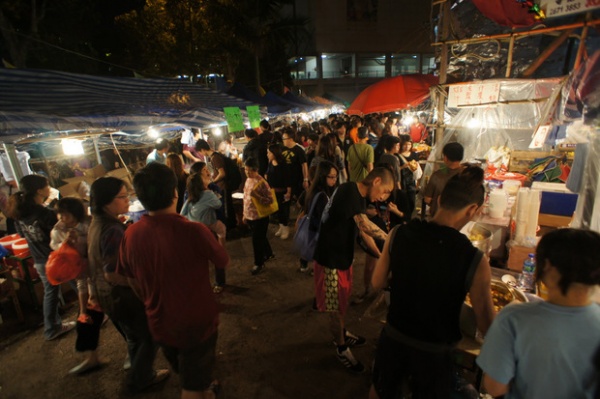
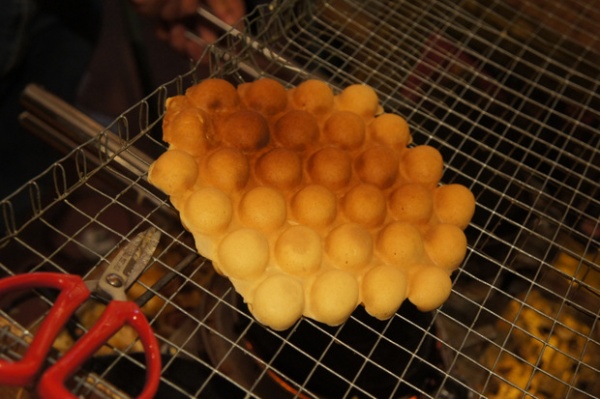
▼ Of course, egg waffles are among the top ten street foods on offer
▼Curry fish balls: a classic Hong Kong street snack

▼It’s a barbecue restaurant—you can tell from the photos that it looks really tasty.
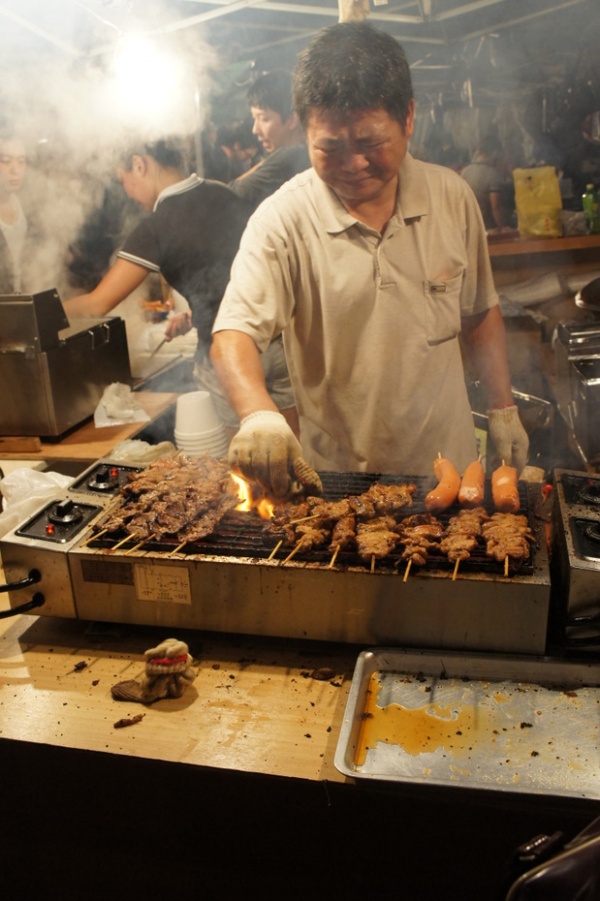
▼The barbecue skewers include chicken, beef, pork and sweetcorn, amongst others
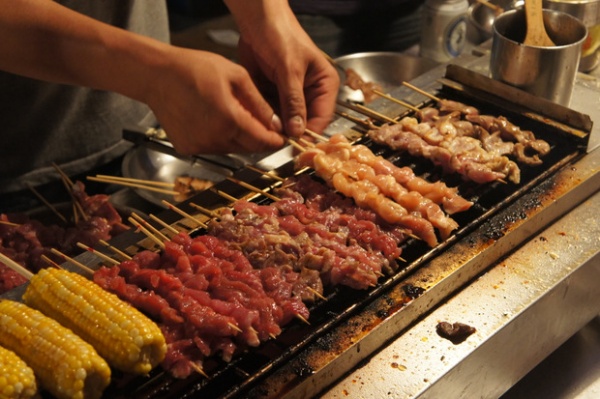
▼All the barbecued meat is deliciously charred and fragrant
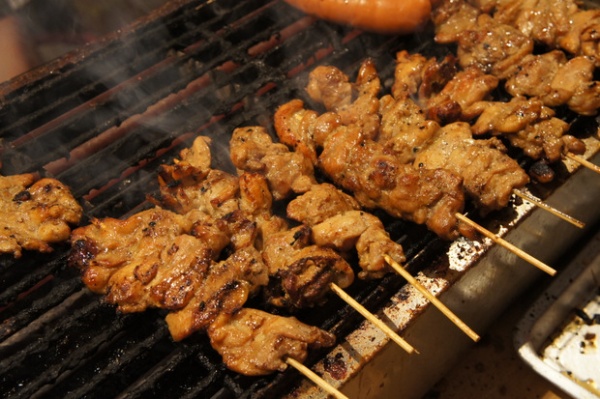
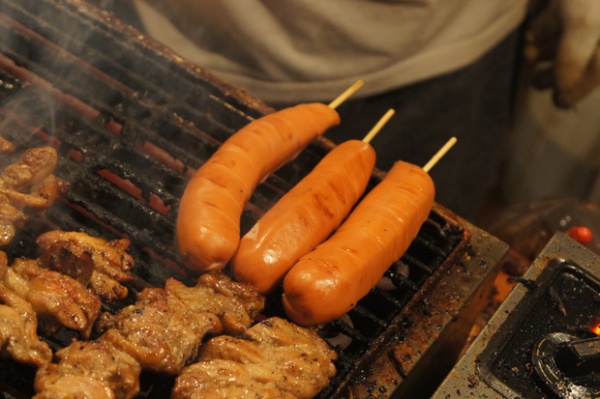
▼Simple grilled sausages
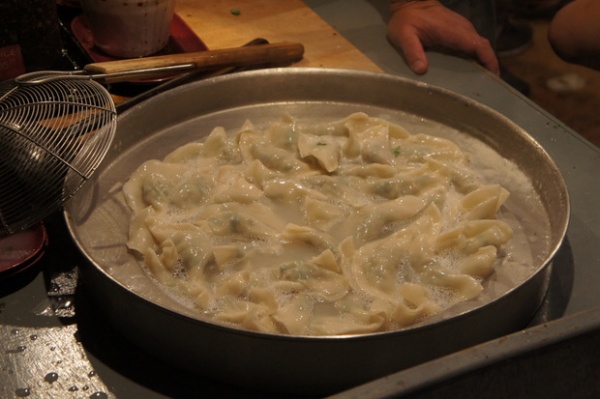
▼Another Northern-style dumpling stall with a long queue of visitors
▼Many people say that this ”pork and egg burger” (also known as a fried egg pancake) is a must-try. It’s simply made by shaping a batter into a crispy pancake and frying it with an egg inside – simple, yet absolutely delicious.
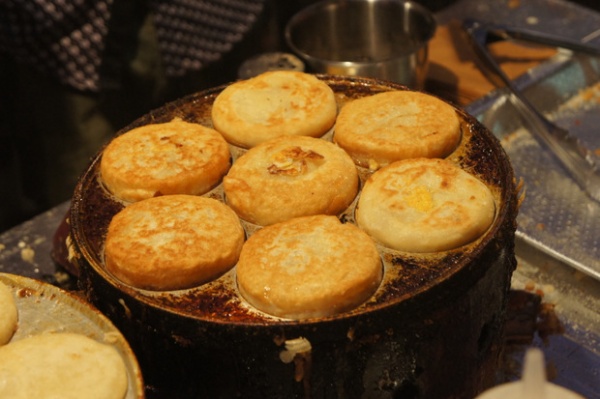
▼Even if you’re not into barbecued food, the pan-fried chicken wings and Japanese-style beef rolls with golden mushrooms are also very tempting

▼Another classic snack – pan-fried stuffed trios

▼Grilled squid, beef cabbage leaves, and snail meat
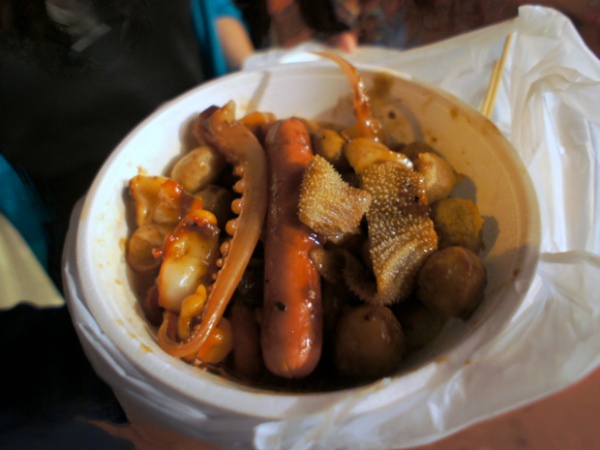
▼And there’s also some lovely, succulent glutinous rice with Chinese sausage

▼A rather unusual doughnut – a nostalgic sugar-coated onion cake
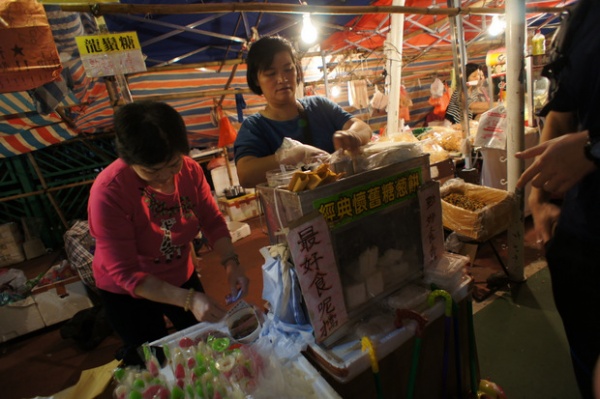
▼As well as some children’s toys, though they’re all from the 1980s, so I doubt today’s children would be interested in them
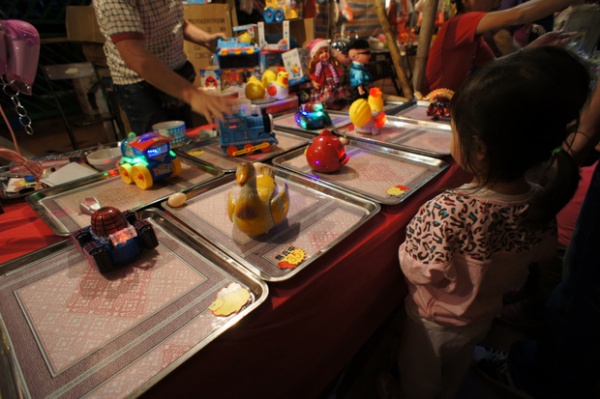
▼ Those childhood treats made from hot syrup—blow-up sweets—may well be a novelty for today’s children.

▼They sell spicy noodles here
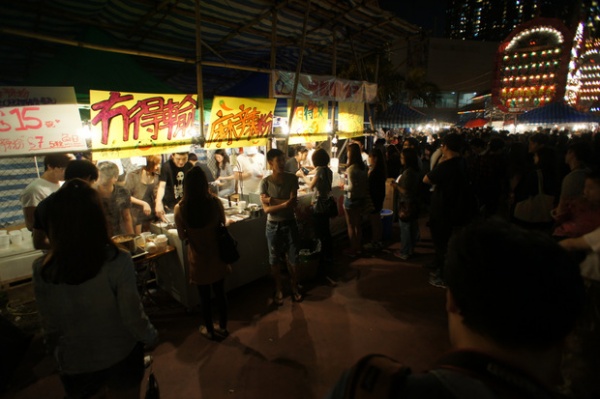
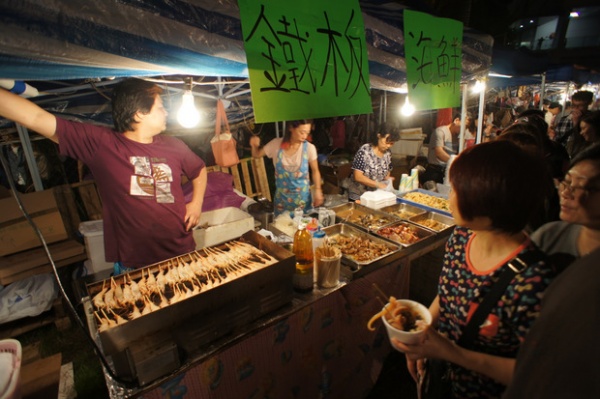
▼They sell seafood cooked on a hotplate
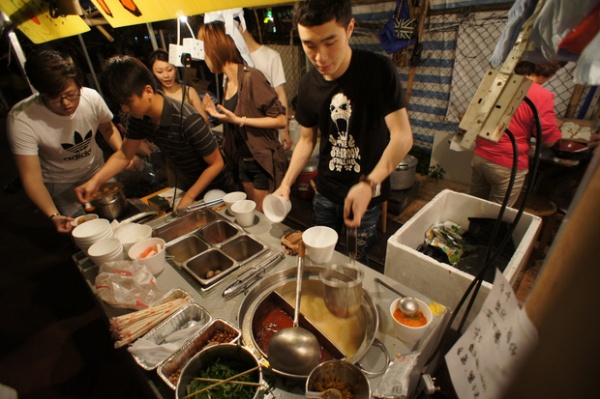
▼Noodle dishes
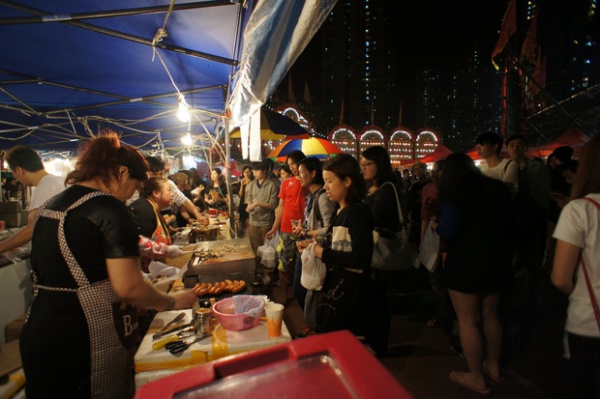
▼ If you see anything you fancy, just join the queue to buy it
‘The Grand Theatre’
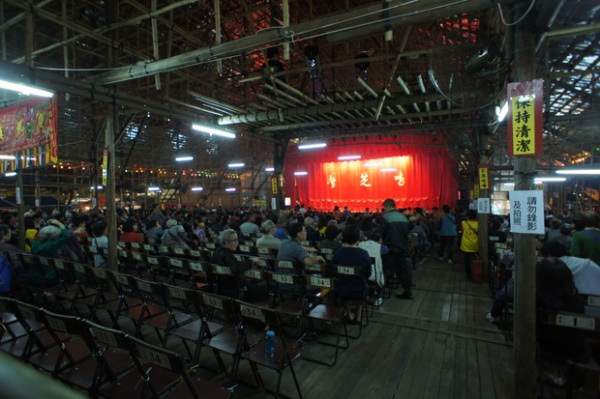
(2) The ArrivalThe Qingyi Theatre.Most of the elderly people here live in the neighbourhood and come to enjoy Cantonese opera—a traditional form of working-class entertainment in old Hong Kong. At the Tsing Yi Open-Air Theatre, there are usually two performances: a matinee at around 1.30 pm and an evening performance at around 7.30 pm. Admission to the matinee performance is free, whilst tickets are required for the evening performance. There is also a small area at the rear of the theatre where spectators can stand and watch from a distance; however, I believe this section is not officially free, and visitors simply stand there discreetly to enjoy the show. and I have never seen any security staff asking visitors to leave. If the ‘Tin Hau Festival’ falls on a Sunday, as it did this year, there is a strong likelihood of firecracker displays and lion dance performances on that day, usually taking place between 8.00 am and 4.00 pm, though it is best to check in advance.
▼The theatre was originally an annex; it is only through the worship of the deities that the true purpose of the programme becomes clear.
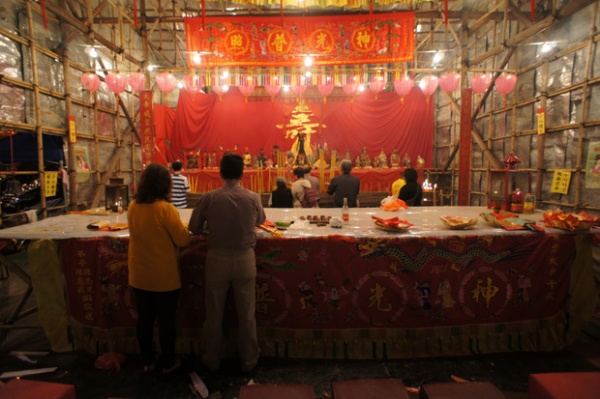
▼ There were clearly not many worshippers visiting in the evening
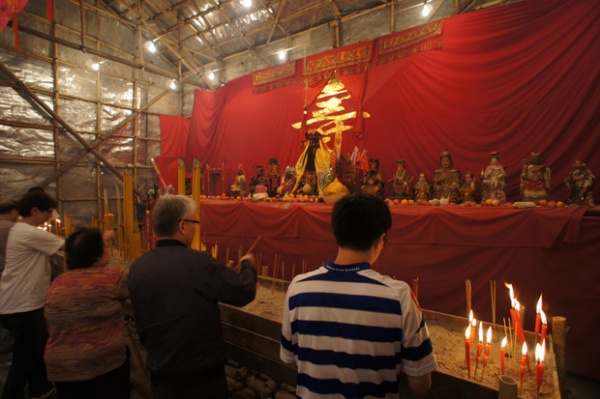
▼As for the other open-air theatres, there are quite a few people who buy tickets to watch Cantonese opera performances; evening performances have an attendance rate of around 80 per cent, whilst matinees are free of charge.
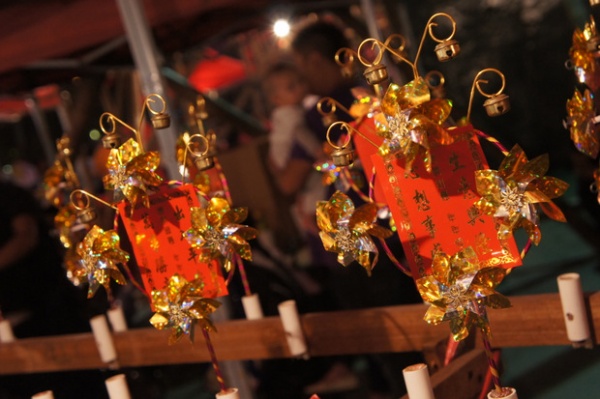
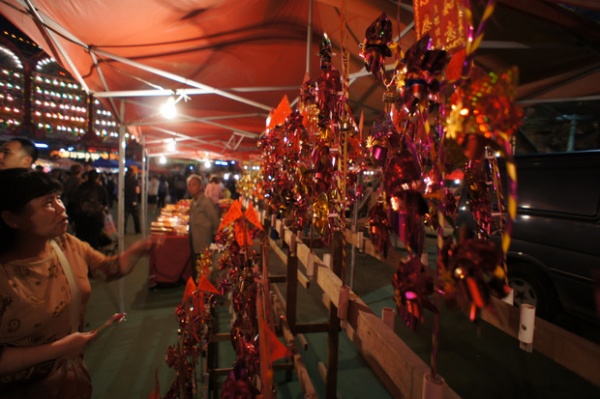
▼As well as stalls selling cooked food, there will still be stalls selling items for worshipping the gods
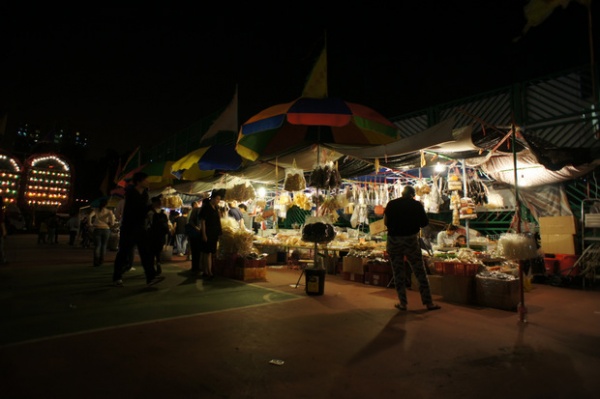
▼Last but not least, here is the dry goods section near the car park entrance
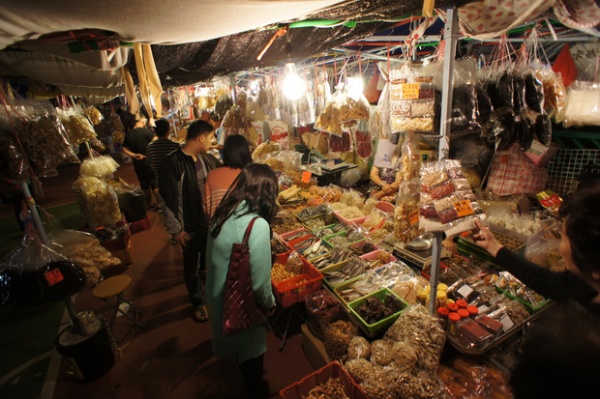
▼The dried goods section stocks affordable, everyday seafood items for home use, such as salted fish and dried prawns; you won’t find ginseng or deer antler products there.
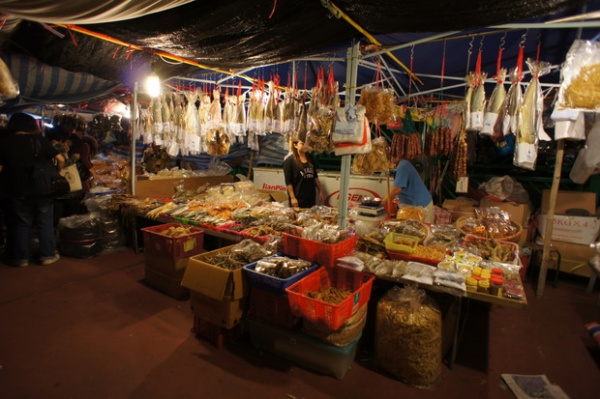
▼The lines are packed full of salted fish
▼Among these, there are a small number of jade ornaments for sale
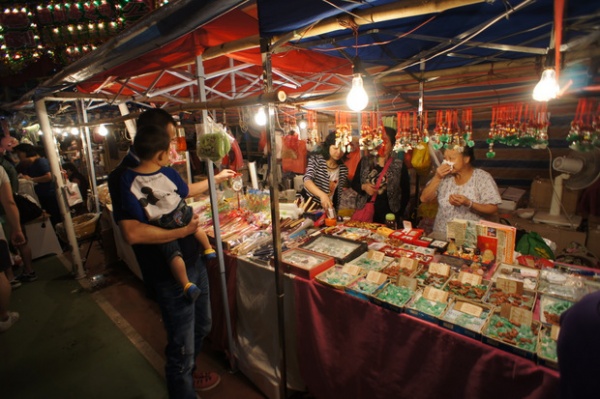
I think that if you want to experience the festive atmosphere of everyday life in Hong Kong, the Tsing Yi open-air theatre is a must-visit.
It takes less than 10 minutes to walk from Tsing Yi MTR Station / inside Tsing Yi City Shopping Centre to the Tsing Yi Open-Air Theatre. The map below does not show the exact location of the exit within the shopping centre, but you can use it to get a sense of the direction and general area. It’s not complicated, but we also recommend asking a member of staff inside the shopping centre for directions.
 Chinese (Hong Kong)
  Chinese (China)
  English
  Japanese
  Korean