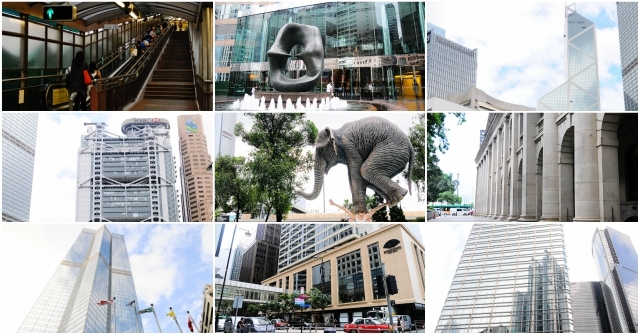

Central is the heart of Hong Kong and a major political, economic and commercial hub. The Government House, where the Chief Executive of Hong Kong resides, the Court of Final Appeal and the Central Barracks of the People’s Liberation Army Hong Kong Garrison are all located in this district. It is also home to various international financial institutions, the headquarters of major banks and consulates from around the world. Central enjoys excellent transport links, serving as a hub for four MTR lines, including the Airport Express to Hong Kong International Airport. Ferries also operate from the Star Ferry Pier and the Outlying Islands Ferry Terminal, providing connections to the Kowloon Peninsula and Hong Kong’s various islands.
The most distinctive feature of Central is its sky-scraping, modern commercial buildings, yet it also preserves many distinctive streets dating back over a century, as well as architecture steeped in colonial-era charm. Visitors can explore Hollywood Road—the first street built after Hong Kong’s founding—the over-century-old Stone Slab Street, the Old Central Police Station, a Hong Kong declared monument, and seek out the city’s few remaining century-old gas lamps. At the same time, the International Finance Centre II—one of the world’s ten tallest buildings—and the uniquely shaped Bank of China Tower are also located here. This interplay of old and new creates a striking contrast, yet it feels entirely natural.
‘Stone-Paved Street’

This distinctive street, named in 1858 after Hong Kong’s first Governor, Pottinger, connects Hollywood Road on the hillside with Connaught Road Central at the foot of the hill. As the section between Hollywood Road and Queen’s Road Central is steep and straight, is paved with alternating convex and concave stone slabs. This design allows rainwater to drain away and makes it easier for pedestrians to navigate the slope, which is why it is commonly known as ‘Stone Slab Street’. There are also numerous stalls lining both sides of the street where visitors can purchase interesting souvenirs.
Transport: A 5-minute walk from Central MTR Station
‘Duddell Street’—Hong Kong’s only gas lamp


Duddell Street has one very distinctive feature: at the end of the street, you’ll see a flight of granite steps leading up to Snow Factory Street, and four gas street lamps still stand at the corner of the steps. this is Duddell Street, also known as ‘Gas Lamp Street’. If you’ve watched any Hong Kong dramas or television programmes, you’re bound to recognise Duddell Street. Thanks to its romantic setting and nostalgic atmosphere, it attracts many film crews who come here to shoot scenes, making it one of Central’s must-visit attractions. and you might even happen to spot a celebrity filming here.
The stone steps and gas street lamps are listed as one of Hong Kong’s declared monuments; with a history spanning over a century, they have witnessed events both great and small in Hong Kong’s history and exude a nostalgic atmosphere. Its most distinctive feature is the four gas lamps—the only ones of their kind in Hong Kong. Built between 1875 and 1889, although the exact year of installation cannot be verified, the earliest record dates back to 1922. The gas lamps, which are of the ‘double-bulb Lawes style’, were taken out of service for a time but were reactivated in 1948. In 1984, lampshades and covers were specially commissioned from the UK. Today, the Hong Kong Gas Company supplies the gas and is responsible for maintenance.
Address: Duddell Street, Central, Hong Kong
Opening hours: Monday to Sunday: 24 hours a day
How to get there: Approximately a 7-minute walk from Exit H of Central MTR Station
‘Statue Square’

The central square, which was renamed Queen’s Statue Square in 1897, was a landmark in the early days of Victoria City. It was built to commemorate the 60th anniversary of Queen Victoria’s accession to the throne, and a bronze statue of the Queen was cast and erected here. In 1906, to honour the contributions of Mr Zetschen, General Manager of the Hong Kong and Shanghai Banking Corporation, a bronze statue of him was erected on the square, where it remains to this day. The square’s English name, Statue Square, derives from the fact that several bronze statues of members of the British Royal Family were once situated in the northern part of the square, including those of Queen Alexandra, King Edward VII, Governor May, and King Edward VII.
Now, only the statue of Lord Chisholm remains in the square; following the end of the Second World War, the statue of Queen Victoria was moved to Victoria Park, whilst the recovered statues of King Edward VII and Empress Alexandra were returned to the United Kingdom.
In the 1950s, the government redeveloped the square and opened Hong Kong’s first pedestrian tunnel on its northern side, linking Edinburgh Place and the Hong Kong City Hall; a fountain, pavilions and landscaping features were also added to the square.
Transport: Take Exit D1 at Central Station on the MTR Tsuen Wan and Island Lines, walk along Queen’s Road Central towards Central Plaza, then take the Central–Mid-Levels escalator to reach your destination.
‘The Mid-Levels Lift’

With a total length of 800 metres and a vertical rise of 135 metres, this pedestrian transport system—comprising 20 unidirectional escalators capable of reversing direction and three moving walkways—links Central to Mid-Levels in Hong Kong. Its annual electricity bill amounts to approximately HK$500,000, its construction cost HK$240 million; however, due to severe cost overruns – the project had originally planned to build six escalators, but only one has been completed to date.
Since its opening in 1993, the tram has primarily served to facilitate travel for Mid-Levels residents to and from the Central business district, whilst alleviating traffic congestion in the Mid-Levels. Running from the Central Market to its terminus at Conduit Road, the route comprises a combination of covered walkways and footbridges. It is currently used by approximately 55,000 people daily, with the journey taking around 20 minutes. The most leisurely way to explore Mid-Levels is to take the escalator upwards, allowing visitors to explore the Old Central Police Station, SoHo and the Dr Sun Yat-sen Memorial Hall, amongst other attractions.
Address: Jubili Street, Central
‘The Old Supreme Court Building’: a stately and solemn structure modelled on ancient Roman and Greek architecture
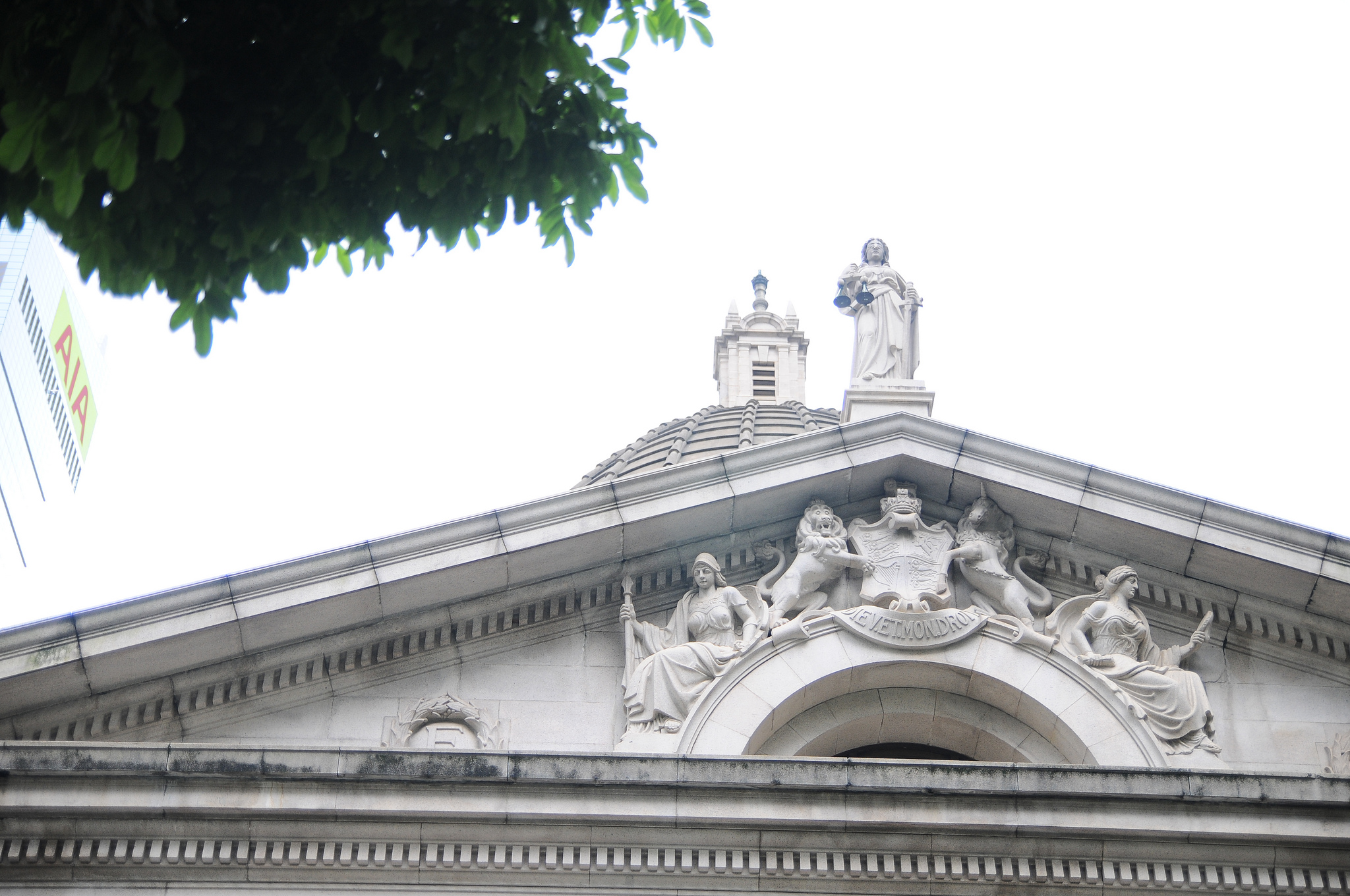


The former Supreme Court building, constructed of granite, is crowned by a statue of the ‘Goddess of Justice’—holding a set of scales in her right hand and a sword in her left hand and a blindfold over her eyes. The building’s design is modelled on ancient Roman and Greek architecture, giving it an imposing, dignified and solemn appearance, The building is supported on all four sides by massive stone columns and adorned with elegant balustrades, whilst the roof features a domed finial commonly found in Western-style architecture,
It is adorned with the royal coat of arms and images of the ‘God of Forgiveness’ and the ‘God of Truth’, symbolising the divine power bestowed by Heaven. Although the interior is not open to the public, the European-style architecture, combined with the spacious surroundings and the romantic atmosphere after sunset, makes this a popular spot for couples to have their wedding photographs taken.
Address: 8 Jervis Road, Central, Hong Kong Island
How to get there: Take Exit J1 from Central MTR Station and walk along Jervois Road for about 2 minutes.
‘Bank of China Tower’


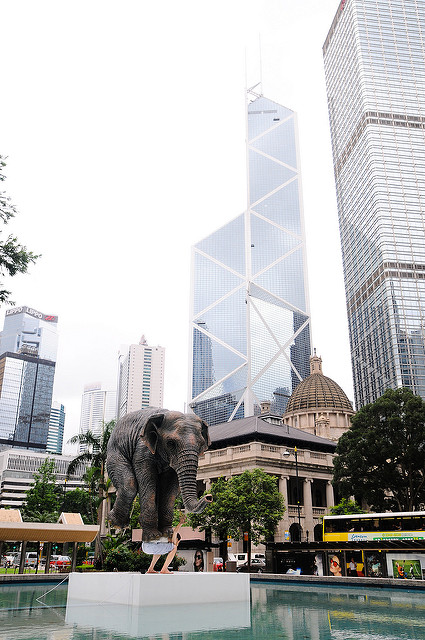
The Bank of China Tower has a distinctive prismatic design. This 70-storey building stands 315 metres tall, reaching a total height of 367.4 metres including the two spires at the top, and was designed by the Chinese-American architect I. M. Pei. The granite cladding on the building’s base represents the Great Wall of China, whilst its shape is modelled on the ‘rising segment by segment’ form of a bamboo tree, symbolising vigour, strength, a spirit of determination and vitality. Once the tallest building in Hong Kong and Asia, it is also the only famous Hong Kong building to feature in the computer games *SimCity 3000* and *SimCity 4*, and has become one of the city’s most prominent landmarks.
As the advice of feng shui masters was not taken into account during the construction of the Bank of China Tower, the design has been accused of adversely affecting the feng shui of surrounding buildings; neighbouring buildings and the Government House have all had to make feng shui adjustments as a result. It is worth noting, however, that the 43rd floor of the building features a small observation deck open to the public, whilst the ‘Seven-Tiered Hall’ on the top floor (the 70th floor) serves as the main observation deck—though visits to the latter require prior booking. Both offer excellent vantage points from which to view Hong Kong’s skyline.
Address: 1 Garden Road, Central
How to get there: Take Exit J2 from Central MTR Station, walk through Chater Garden towards Garden Road; the walk takes about 5 minutes.
‘The Open-Air Car Park at the Old Star Ferry Pier, Central’

Address: 9 Edinburgh Place, Central
‘The Old Central Police Station’
 Built in 1864, this complex of classical buildings—formerly known as ‘Tai Kwan’ and ‘Central Police Station’—which once served as the Hong Kong Police Headquarters and the Central Police Station, was expanded in 1919 with the addition of a four-storey building. In 1925, a two-storey armoury was constructed to the north-west. Later, when the Hong Kong Police Headquarters relocated to Armoury Street in Admiralty, leaving the original police station vacant. Together with the adjacent ‘Victoria Prison’ and the ‘Former Central Magistracy’, the site was returned to the Government in 2005. Plans were made to develop it into a historical and cultural tourism complex at a cost of HK$1.8 billion, and it was designated a statutory monument of Hong Kong.
Address: Hollywood Road, Central
*A Century of History at Victoria Prison*

Victoria Prison, formerly known as the Central Prison, was Hong Kong’s first prison. It was designated a statutory monument in 1995 and, together with the Old Central Police Station and the former Hong Kong Central Magistracy, forms the Central Police Station Complex. The complex comprises three single-storey buildings, three two-storey buildings and three three-storey buildings, constructed from brick, stone and granite, and includes the Administration Block, a laundry, a hospital, a canteen, a guard room and a kitchen. The prison underwent several expansions before reaching its current scale. Completed on 9 August 1841, it was Hong Kong’s first prison and the first permanent Western-style building. Although Hong Kong had not yet formally become a British colony at that time, and the Treaty of Nanking had not yet been signed, the British military had already occupied Hong Kong Island and had begun establishing Victoria City there; consequently, given the practical needs of the time, the construction of Victoria Prison was essential.
In 1930, Ho Chi Minh, Vietnam’s first President, was detained here, and during the Japanese occupation of Hong Kong, the facility was also used to imprison Allied political figures and military commanders. It is said that Dr Sun Yat-sen, the ‘Father of the Nation’, was also held here by the British government before being transferred to a foreign country. After Hong Kong became the primary port of refuge in the 1980s, the site was also used as a centre for the transfer and deportation of boat people. It has borne witness to nearly a century of Hong Kong’s history, and following its decommissioning in 2006, the Central Police Station complex—which includes Victoria Prison—is to be restored for tourism purposes.
‘The Hong Kong Medical Museum’

Founded in 1906, it was originally known as the ‘Bacteriological Laboratory’, later renamed the ‘Old Pathology Laboratory’, until it closed in 1973. In 1996, it became the Hong Kong Museum of Medical History, a museum built in the Edwardian architectural style. The museum traces the history of the development of both Chinese and Western medicine in Hong Kong, as well as how diseases were combated in the past.
*Hollywood Road*

The first street built after the founding of Hong Kong was named ‘Hollywood’ after the holly trees (Hollywood) that once lined the street; it is therefore unrelated to Hollywood, the centre of the American film industry. This was once the childhood home of Hong Kong’s Chief Executive Donald Tsang, and was historically a neighbourhood where the working classes resided. Along Hollywood Road, there are a few shops selling antiques; walking eastwards, one passes historical sites such as the Sun Yat-sen Heritage Trail, the Man Mo Temple and the former Central Police Station, whilst the final stretch leads to the Lan Kwai Fong, SoHo and the Mount Davis Funicular areas.
‘HSBC Head Office Building’


The HSBC Main Building in Hong Kong (English: HSBC Main Building) is the fourth-generation headquarters of HSBC in Hong Kong. Located in Central, Hong Kong, it serves as the head office of The Hongkong and Shanghai Banking Corporation Limited. Once the world’s most expensive building, it stands 180 metres tall, comprises 46 storeys and four basement levels, and cost HK$5.2 billion to construct.
The building is situated between Queen’s Road Central and Des Voeux Road Central, close to Queen’s Statue Square and the Standard Chartered Bank Building, and is also near the MTR Central Station. Its registered address is ‘1 Queen’s Road Central’; Some people mistakenly believe that the entrance on Des Voeux Road, facing the bronze lions at Queen’s Statue Square, is the main entrance; however, the actual main entrance is the one on Queen’s Road Central, facing the Cheung Kong Center.
In front of the HSBC Head Office building in Hong Kong stand two lions; each bronze lion weighs 2,250 pounds. One is named ‘Stitt’, after G.H. Stitt, who was the manager of the Shanghai branch at the time. The other, with its mouth open in a roar, is ‘Stephen’, named after A.G. Stephen, General Manager of the Hong Kong Head Office from 1920 to 1942, whose initiative led to the casting of the bronze lions. However, both of these are replicas; the first pair is situated at the HSBC Head Office building in Hong Kong, the second pair stands in front of the HSBC Group headquarters in London, and the third pair is in front of the Shanghai Pudong Development Bank. The original ‘Stephen’ is currently on display at the Shanghai Urban History and Development Exhibition Hall, whilst ‘Sti’ is housed at the Shanghai Banking Museum.
Every Saturday, Sunday and on public holidays, the ground-floor plaza of the HSBC Head Office Building and the nearby Queen’s Statue Square become popular holiday destinations for many Filipino domestic workers. The HSBC Head Office Building is one of the buildings featured in the ‘A Symphony of Lights’ show.
(Excerpted in part from Wikipedia)
Address: 1 Queen’s Road Central, Central
‘The Peace Monument’

The Hong Kong Peace Monument, where flag-raising and lowering ceremonies were held every morning and evening prior to Hong Kong’s return to China, was erected in 1923 to commemorate soldiers who fell during the First World War. The front and back of the monument each feature three flagpoles, inscribed with the Chinese words ‘The spirits of the fallen live on; their noble spirit endures’ and the English words ‘The Glorious Dead’, whilst the sides are adorned with garden-style carvings symbolising remembrance of the deceased. Following the Second World War, the monument came to honour those who lost their lives in both world wars. Beneath the monument, the dates ‘1914–1918’ and ‘1939–1945’ mark the years of the two world wars, whilst the top bears the Roman numerals ‘MCMXIX’, representing the year 1919 when the Treaty of Versailles was signed. The summit features a sculpted sarcophagus designed to hold wreaths, symbolising remembrance of the fallen soldiers. Following the handover, the flag-raising and lowering ceremonies were moved to Golden Bauhinia Square and are now conducted by the Hong Kong Police Force. However, commemorative events are still held annually on 15 August, the ‘Victory Day of the War of Resistance Against Japan’, and on the second Sunday in November, the ‘Peace Memorial Day’.
‘Mandarin Oriental Hotel’

Since opening in 1963, this internationally renowned five-star hotel has maintained its traditional British décor and has been rated as one of the best hotels in Asia. In addition to offering views of Victoria Harbour, the hotel has hosted a number of international celebrities, including the former British Prime Minister Margaret Thatcher, George Ford and George H. W. Bush, the late Princess Diana of Wales, former US President Richard Nixon, cellist Yo-Yo Ma and actor Tom Cruise.
On 1 April 2003, the renowned Hong Kong singer Leslie Cheung, who was also a regular guest at the hotel, lost control due to depression and jumped to his death from the café on the 24th floor of the hotel, aged 46. Since then, every 1 April, film and music fans from all over the world have come here to pay their respects and hold memorial events.
Address: 5 Connaught Road Central, Central
Transport: The hotel is a one-minute walk from Exit F of Central MTR Station.
‘Bank of China Tower’ – a Grade I historic building in Hong Kong


The site of the ‘Bank of China Tower’ was originally part of the old Hong Kong City Hall. It was put up for auction as Crown land in 1947 with a reserve price of 2.778 million yuan; it was eventually acquired by Zheng Tie-ru, then General Manager of the Bank of China, for 3.745 million yuan—a sum that set a new record for Crown land auctions at the time.
The façade of the ‘Bank of China Tower’ features a vertical composition; the exterior walls are clad in local granite, whilst the interior features a steel-framed structure—a rarity at the time—and an ‘eclectic’ design that combines ‘Modernism’ with Chinese decorative elements.
The entrance to the ‘Bank of China Tower’ is flanked by two stone lions facing east, with a metal revolving door in the centre; the ground floor houses the bank’s lobby, the walls are clad in imported Italian marble, and there are four decorative columns in bronze and stainless steel; the ceiling features a pattern of Chinese coins laid out in Venetian gold mosaic. The building has been designated a Grade I listed building.
Address: 1 Garden Road
*The Memoirs of He Xi*

‘Zhe’: a Cantonese word meaning ‘umbrella’. Ho Hung-hei – known as ‘Uncle Ho’ and hailed as the ‘Umbrella King’ – began making umbrellas in 1947 and continues to craft bespoke umbrellas for customers every day. He once made cowhide umbrellas for foreign customers, which he still keeps in his small stall. In 1994, an umbrella he sold for 167 pounds was listed in the Guinness World Records as the ‘world’s most expensive umbrella’.
Mr Ho has been repairing umbrellas for locals and visitors alike in Central six days a week to this day, come rain or shine. His customers range from local residents to foreign consuls; most come to have their umbrellas repaired because they hold sentimental value. As long as the frame is intact, the umbrella can be repaired, with charges starting from HK$1 to HK$4 to HK$20 per umbrella.
‘Central Centre’


The ‘Central Centre’ at Sheung Wan Station is the 15th tallest building in the world, standing at 346 metres. Completed in 1998, it was the fourth tallest building in Hong Kong at the time, surpassed only by the International Finance Centre, the Bank of China Tower and Central Plaza. The building is the first in the world to feature a decorative design incorporating colour-changing neon lights, and the lifts within the building are the fastest in Hong Kong.
Address: 99 Queen’s Road Central, Central
*City Gallery*

‘City Gallery’ is Hong Kong’s first exhibition venue dedicated to the themes of planning and infrastructure development. This unique exhibition space showcases Hong Kong’s major planning proposals and infrastructure projects, and provides an overview of the city’s future development direction.
‘City Gallery’ was formerly known as the Hong Kong Planning and Infrastructure Exhibition Centre. The centre opened in 2002 and was originally located on the ground floor of the Central City Hall Annex Building; it closed in April 2009 for refurbishment and expansion. Whilst the works were underway, the exhibition centre was relocated to the ground floor of the Murray Road Multi-storey Car Park Building, where it continued to serve the public.
In 2012, a permanent exhibition hall known as the City Gallery opened. Meanwhile, the themed exhibition area in the basement is regularly updated every two to three months to host interesting and special exhibitions, such as the recent Hong Kong Miniature Exhibition and the Giant Yellow Duck currently on display.
Address: 3 Edinburgh Place, Central
Opening hours:
Saturday 10:00–18:00
Sunday 10:00–18:00
Monday 10:00–18:00
Closed on Tuesdays
Wednesday 10:00–18:00
Thursday 10:00–18:00
Friday 10:00–18:00
Tel: 3102 1242
‘Hong Kong General Post Office’

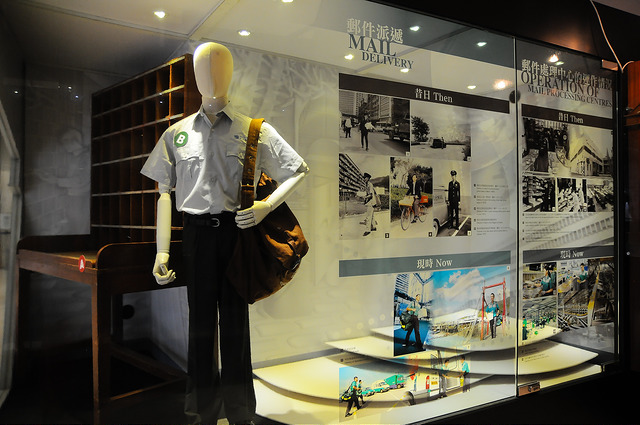


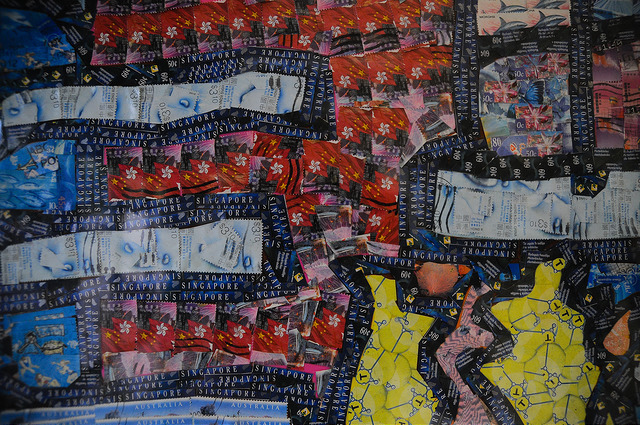

The Hong Kong General Post Office is one of the busiest post offices in the city. Originally known as the Letter Office, it began providing postal services as early as 1841. Built in 1976 and currently situated at 2 Leisure Square, Central, the General Post Office is now in its fourth incarnation. In addition to providing postal services, the building also sells a range of exquisite philatelic items and features exhibitions and a historical gallery detailing the evolution of the postal service.
2 Leisure Square, Central
‘Sun Yat-sen Memorial Hall’

Established in 1996, the ‘Dr Sun Yat-sen Historical Trail’ links the sites in Hong Kong where Dr Sun Yat-sen was active during his lifetime, comprising 14 sites across Central, Sheung Wan and Sai Ying Pun, including the places where he lived, studied, attended church and met with fellow revolutionaries, in order to highlight his close ties with Hong Kong. This heritage trail was established to commemorate the 130th anniversary of Dr Sun Yat-sen’s birth, and each site features an information board providing relevant historical details.
The Dr Sun Yat-sen Museum, which opened in 2008, is housed in a four-storey building constructed in 1914. Formerly known as Kam Tong House, this Edwardian-style building was originally the residence of Ho Kam-tong, the younger brother of the wealthy Hong Kong merchant Ho Tung. The interior of the building is magnificently decorated, featuring curved balconies, stained-glass windows and teak balustrades; it is one of the few early 20th-century buildings in Hong Kong to have been preserved in such a complete state. The building now primarily uses a diverse range of audiovisual programmes to recount the life and deeds of Dr Sun Yat-sen, as well as Hong Kong’s role in the reform movement from the late 19th to the early 20th century.
Address: Kam Tong Di, 7 Wai Cheng Road, Central
Opening hours:
Saturday 10:00–19:00
Sunday 10:00–19:00
Monday 10:00–18:00
Tuesday 10:00–18:00
Wednesday 10:00–18:00
Closed on Thursdays
Friday 10:00–18:00
Tel: 2367 6373
‘Hong Kong Exchanges and Clearing’

The Hong Kong Exchanges and Clearing Limited (HKEX) is located in Exchange Square. The first sculpture is an infinity-shaped sculpture situated in the centre of the fountain at the main entrance; the second is a pair of water buffalo sculptures and a Tai Chi sculpture, both cast by the renowned Taiwanese sculptor Chu Ming, which stand in the fountain at the main entrance.
Since the exchange began renovating its main hall in 2005, space has been set aside for a conference hall and exhibition gallery, visitors can observe the operations of the trading floor through the exhibition hall’s glass windows. In addition to showcasing the evolution of the Hong Kong Stock Exchange, the exhibition hall also features actual trading desks and computers once used on the trading floor. Most importantly, as the venue for futures and equities trading in Hong Kong’s financial centre, the Hong Kong Stock Exchange has seen daily trading volumes peak at over HK$10 million.
Address: Exchange Square, Central
‘Yee Ho Building’


Originally known as the Recreation Building, the building is renowned for its distinctive circular windows and has become one of Hong Kong’s landmarks. In the 1970s, the British-owned consortium, Hongkong Land, purchased the site for over HK$2.1 billion, setting a record for the highest land price in Hong Kong at the time. The 52-storey (178.5 metres) Jardine House was completed in 1973, with construction from ground-breaking to topping-out taking just 16 months. It was once the tallest building in Hong Kong and Southeast Asia, as well as Hong Kong’s first skyscraper and a record-breaking achievement in construction at the time. The Chinese restaurant on the ground floor is also of a high standard, making it an excellent choice for sampling authentic Cantonese cuisine. It was not until 1988, when the Jardine Matheson Group headquarters moved into the building, that it was renamed Jardine House.
‘Changjiang Group Centre’


Li Ka-shing, Hong Kong’s wealthiest man, had this smart office headquarters built for his Cheung Kong Holdings in 1999. The building’s façade features a fibre-optic lighting system capable of displaying various patterns as required, and the exterior adopts a square architectural layout. The western exit of the complex connects to the site of the Hong Kong Court of Final Appeal, whilst the eastern exit links to the Admiralty footbridge, allowing visitors to explore the surrounding area with ease without having to cross any roads.
Address: 2 Queen’s Road Central, Central
 Chinese (Hong Kong)
  Chinese (China)
  English
  Japanese
  Korean